Saturday, May 24, 2014

DC Comics - Back to the Future Past

I've been a big DC comics fan for a long time. Batman is clearly my favorite character, but I read and have read numerous other books DC publishes (or has published in the New 52) like Flash, Constantine, Justice League Dark, Red Hood and the Outlaws, Animal Man, Amethyst, Earth 2, Dial H, etc. Now, not all these books were great, and I've dropped several titles in the New 52, and lately even found myself buying quite a large number of Marvel books, which I hadn't really done in years (save books like X-Factor, which was brilliant).

I couldn't quite put my finger on why I found myself growingly frustrated with the DC books, sometimes reading a title out of habit, or because I kept feeling like it was going to get good, instead of it simply being good. It seemed intangible, but it seemed a problem that was going on line wide. I just couldn't quite figure out why I was growing increasingly frustrated, and even enjoying the marvel books more.

Then I read Forever Evil # 7.


Now, let me back up for a second. Back in 2011, DC comics announced that they were effectively rebooting their entire universe following an event called Flashpoint. The reasoning for this was the perennial DC belief that their continuity was bogging them down, and holding back fresh story ideas because the current confines and histories of certain characters made reduced the possibilities available. Moreover, DC is perpetually afraid of aging their characters.

So starting in August 2011, the entire DCU rebooted with 52 first issues, and the belief that characters had only been active for 5 years. This arbitrary time frame allowed writers to keep certain events an canon, while others simply never happened. This created problems in establishing exactly how certain events and plotlines happened within such a short time. How did Batman have 4 Robins in 5 years? How long was Barbara Gordon Batgirl before she was shot, and how long had she been Oracle before she was able to walk again? Did things like Knightfall ever happen? How did certain events happen if characters integral to them don't exist in the New 52?

 Still, the New 52 did open up possibilities on books like Wonder Woman and Flash, while Batman and Green Lantern virtually ignored the entire reboot. Every few months, the lowest selling books were canceled, and new books were maintained in an attempt to keep 52 titles. And this process allowed titles that hadn't been tried before or in a long time, to have a change to get a following.

Now, there has been a lot of criticism of the New 52, including the fact that very soon DC will have canceled 52 series since launching the new 52 and that some readers feel that their favorite characters (like Wally West) have been ruined by the reboot. There's not a whole lot that can be said about either of these points. The first is a fact of business, and while DC can be criticized for a harsh editorial mandate, they've at least given certain books, like All-Star Western, a chance. The second is really a matter of personal taste and individual connection to a specific version of a character.

Anyway, I've been pretty much behind the New 52 since it happened. It helped that I'm primarily a Batman fan, and not much changed on the Batbooks. It also helped that I got interested in books that hadn't really existed before like Justice League Dark, and the new takes on characters like Wonder Woman and the Flash.

I even bought into last years first big DC event Trinity War, and this is where the problem with DC started to become evident.

The premise of Trinity War was simple, Superman kills Doctor Light. This throws the Justice League, the JLA and the Justice League Dark into conflict which is made worse by the enigmatic character Pandora and her, you guessed it, box. We're lead to believe that if this box can be opened, that perhaps whatever is wrong with Superman can be fixed, and the ills of the world might be removed. Sure, the last part is never gonna happen in comics, but the set up is fun.

Ultimately, we got a terrible bait and switch. When the box is opened, we don't get a fixed Superman, or an end to the ills of the world. We only get...
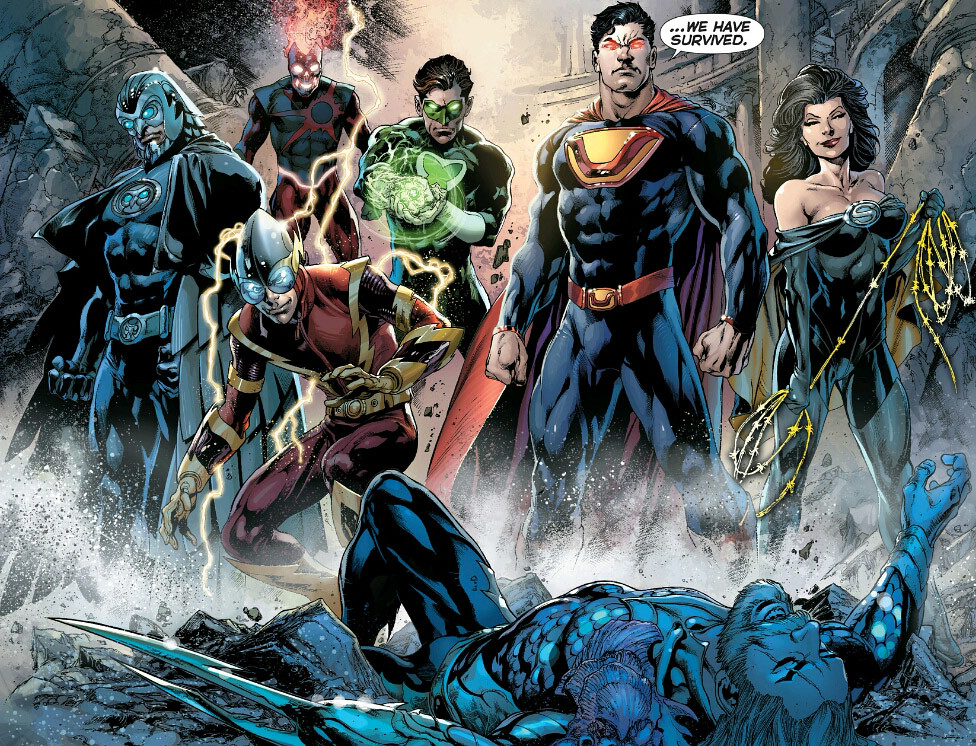

The Crime Syndicate, the evil Justice League of Earth 3.

Realistically what we got was the demand to buy the next DC event, Forever Evil. Yes, another event series with a slew of tie ins that only tie into the regular titles of the DCU in the most tangental way. Most books ignored the event entirely for the bulk of its run, and only acknowledged that it happened after it was over. Still, if you want to know why Dick Grayson is suddenly presumed to be dead, you have to read Forever Evil.

So, this week, after 6 issues of setup with the Crime Syndicate running the world, the Justice Leagues (except Batman and Catwoman) missing and villains trying to fight back, Forever Evil 7 ties up most of the loose ends (though apparently, like Amazons Attack, several MAJOR plot points happened in tie ins), in the most rushed manner, but also ham-handedly paves the way toward the next DCU event. by revealing that Crime Syndicate fled Earth 3 to escape (SPOILER WARNING) ....

The Anti-Monitor!

That's right kiddies, after we got done a very pre-Crisis on Infinite Earths story, we get a reveal of the big bad of COIE.

Someone at DC thought this was a shocking reveal.Someone at DC also thought that building last summers event Trinity War into another event, Forever Evil, was a fantastic idea. This brings me to the point of this post, and the reason I think DC comics is headed down a very bad path at the moment.

As I said earlier, the New 52 was built on the premise of "We have awesome new stories to tell, but we're having a hard time telling them because of the continuity that other people built decades ago". That's a fair enough statement, and it's the statement that the classic Crisis on Infinite Earths was built on. Reduce continuity and confusing elements in order to bring in new readers and increase sales.

But here we are 3 years into this grand endeavor and what we're getting from the the company is mega-event after mega-event (a criticism of the pre New 52 DC) that serve as little more than a teaser for the next mega-event. Worse still, these mega-events are just culling 70's and 80's throwbacks. That's not "new" or "fresh", that's just rehashing things we've already seen and enjoyed.

It's not to say that rebooting a character can't have great results, even if the reboot was terribly handled. Over at Marvel a ham-handed editorial mandate forced a very sloppy and harebrained Spider-man reboot. Like the New 52 there was a huge fan outcry, and like the New 52, fans boycotted (myself included). Unlike the New 52, the reboot has actually allowed Spider-man to shift it's focus and actually tell new and fresh stories. Characters who had been hastily killed off were back, and became vital pieces of the story being told. They had character growth, and made you care that they were back.

The New 52, for the most part, has just shown itself to be the result of lazy storytelling. Like Spider-man's reboot, the New 52 allegedly stemmed from a conversation about how to un-marry Superman. Unlike Spider-man, this didn't result in taking characters back to their core, while largely preserving storylines people liked. It just allowed the DC brain-trust to strip away stories in order to tell them again.
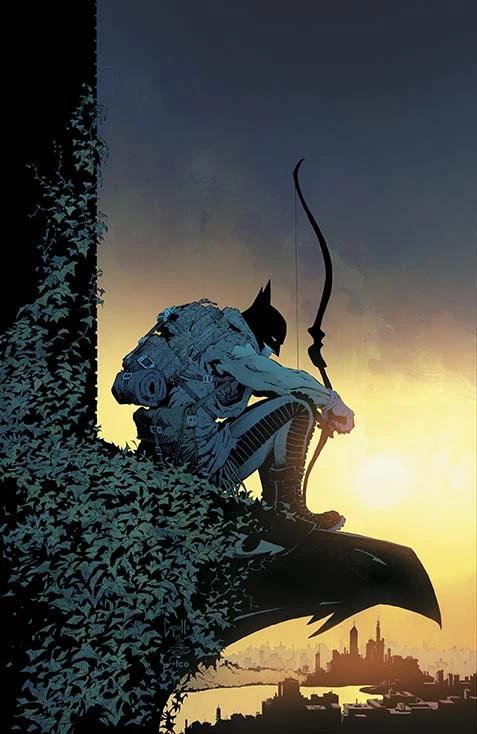
For example, for nearly a year now Batman, the book not the character, has been taken over by telling an extended origin story called Year Zero. This storyline was fine when it seemed like a diversion for a few issues, but after showing Bruce decide to be Batman and battle a reimagined Red Hood, the story continues in order to show Batman's first encounter with the Riddler who somehow managed to take total control of Gotham and shunt it back to the stone age through dictatorial rule.

I would never deny that Scott Snyder is a fine writer, and his writing on Batman up to Year Zero was fantastic. I'm not even opposed to touching back on Batman's origins just to clearly establish which of the multitude of versions is actually canon this time around. But a year long retelling of his backstory, including a major event which seems to chew up a disproportionate amount of the limited 5 year window the character has existed just seems ridiculous.

DC did a Batman origin reboot with Frank Millers Batman: Year One, and in 4 issues told a story with such intimacy and depth that what was intended as a elseworlds story was made canon through the sheer force of fan love. Moreover, elsewhere in the Batman line, a character from Batman Year One has shown up bearing a reminder of the events of Year One. How can this be if Year One is now replaced with Year Zero?

It feels very much like the editorial top brass at DC is stuck in a mentality of being risk averse. This mentality has lead them to harken back to their greatest successes in an attempt to relive their glory days. This isn't necessarily a new problem, after all when DC's readership started to flag 10 years ago they mirrored Crisis on Infinite Earths with Infinite Crisis (another story which features Superboy, Alexander Luthor and Earth 2 Superman... with a special appearance by the Anti-Monitor). The event was supposed to provide something of a fresh start again, and when it failed to do so, DC launched Final Crisis 2 years later (which was far from the event story DC envisioned, but for my money a much better story than Infinite Crisis).


Moreover, even when DC has maintained an ongoing new series, this fear if commitment to new directions has caused the tone to be wildly inconsistent. Red Hood and the Outlaws is a series that was pitched as watching characters who were the outsiders of the DCU get things done in more roguish ways than the normal heroes would handle. It seemed like perhaps DC's answer to Guardians of the Galaxy, or even things like the A-Team. A bunch of rogues who do the right thing. Instead the book has swerved wildly between being an space book, a supernatural book, and a crime book. The characters have been inconsistent, and the pacing has been sluggish. It's also bounced through 3 writers in 30 issues, each with a drastically different focus.

On a side note, this risk averse mentality is what has long held DC back at the movies while Marvel has built a universe. Similarly, when DC had a creative mind making a DC film, the made that filmmaker the ONLY voice of the DCCU, for better or worse (First Nolan, now Snyder. All while David Goyer drafts scripts) . It seems there is absolutely no fresh input cinematically for DC.

Notwithstanding, this risk averse mentality has begun to make the "fresh" New 52 feel stale after only two years. Worse yet, DC's sales continue to decline based on this strategy. Despite the bump the entire line got from the launch of the New 52, sales have largely returned to normal if not declined. Batman has taken a sales bump since the New 52, but Green Lantern has dropped down by almost half. Similarly in July of 2011, DC has only 16 comics in the top 50 books selling books for the month. This past March DC only had 12.

Fewer people are reading the "new", "fresh" DC comics than were reading the "old" DC comics. Clearly I'm not alone in believeing that, even after giving the New 52 my adamant support, DC comics is lost and has no real concept of how to pull itself out of the slow inevitable decline. Harkening back to the 80's will not help.

This is not helped by DC taking lessons from the 90's by doing lots of cross-over stories. Only read Superman/Wonder Woman cause you like Wonder Woman? You have to go buy a bunch of Superman books because now the series is part of the Superman:Doomed crossover. Only like reading Justice League Dark or Constantine? For 6 months you need to buy both of those books plus Pandora and Phantom Stranger or you will have no idea what is going on in those books. It's almost as bad as 90's X-Men where there were 6 titles, and if you didn't read all of them, you might as well not read any of them because it was a constant cross-over. If you don't want to read Superman or Phantom Stranger, you're not going to go out and buy the other 6 books in order to keep reading Superman/Wonder Woman or Justice League Dark, you're simply going to stop reading Superman/Wonder Woman or Justice League Dark.

So, what can DC do to fix this downward trend?

Well, in my opinion, they need a hard course correct. They need to focus more on characters and less on events. Part of what has made the Brian Azzarello's Wonder Woman run so great is that is focuses on a group of characters and lets them lead the story. The book has given only passing mentions to the big events of the New 52, but in the meantime, we actually care when a character in Wonder Woman dies. Or when a character reveals a new side. Or when they become something more.

They also need to dump any hard nostalgia for the glory days. If you're dumping your continuity from the 80's, you must also dump the desire to retell those stories. You can't have a fresh start if you're just going to have your current writers give their take on stories that have already been told. Move forward. We don't need more Anti-Monitor or Batman Origin. We need a new character who is more interesting than the Anti-Monitor, and a new Batman story that takes him down a road he's never traveled before.

The core of story isn't in plot, it's in character, and if DC doesn't realize that, I can't help but see them continuing to decline due to editorial mismanagement and reader apathy.

I love Batman, and Wonder Woman and Flash. I don't want to see them disappear or be marginalized. But unless a course correction is taken, I'm not sure how the company will fair in another 15 years or so.

Less nostalgia. New stories. Less time on crossovers and mega-events. More time on character. 


Sunday, May 18, 2014

Selling things that don't exist


     In the early 20th century, there was a con man named George C. Parker who specialized in selling New York landmarks to gullible tourists. He sold Madison Square Garden, Grants Tomb, and the Statue of Liberty. He apparently sold the Brooklyn Bridge numerous times, and lead to that particular con becoming famous. Parker, of course, never had a bridge to sell, nor did he have the Statue of Liberty, but people saw something that they liked and decided they'd be fools to pass up buying something so amazing.

     We look back at those people and we wonder how they could have been so gullible, but we still make those mistakes today. People have bought blocks of wood in parking lots because it looked, on a quick glance, to be an iPad at a price that was too good to be true. The stories pop up in the news a few times a year, and we laugh at someones foolishness. But we all make this mistake to a lesser degree all the time. Sure, we're not buying landmarks or wooden iPads, but we still buy things that turn out to be a bit of a fraud all the time. Why, you ask? Because the entertainment industry sells them to us.

Let me start with a small example:

This is the cover to Nightwing issue #29, released this past March. Looking at this cover, we see Nightwing surrounded by his foes. In fact, this cover features almost every, if not every, antagonist that Nightwing has faced since this series launched under the New 52 banner in 2011.  You've got the Joker, the Trickster, Saiko, Tony Zucco and many others. The cover also exclaims "Ambushed!". 

This cover is clearly selling us a thrilling issue of Nightwing in which all of the adversaries he's faced to date team up and attack him. This sort of ambush isn't new. The dogpile of villains is something that happens to every hero now and again, and it's a great thing to show how on top of their game the hero is. Batman #1 of the New 52 started with Batman in a similar situation. 

I would buy this issue, and I'm pretty sure you would too.

But guess what? This cover has absolutely nothing do with this issue.

Saturday, February 15, 2014

"Robocop" review (yes the quotes denote irony)
* SPOILERS*


Let me start out by saying that I love Robocop, and I have since I was a kid. The original came out when I was 6 and I nearly convinced my mom to take me to see it in the theater (after all, how terrible could a movie with a goofy name like “Robocop” be, even though it was rated “R”). The following year the animated series premiered. I watched every episode faithfully and collected the toys (except for ED-260, which we could never seem to find). I sat through two sequels of declining quality, a television show produced for a budget what seemed like $5 an episode, and a miniseries made for pocket change. I’ve read the comics from Marvel to Dark Horse, to Dynamite to Boom.

I know Robocop, and I love Robocop.
That said, the new Robocop isn’t Robocop. Don’t get me wrong, it’s not “not Robocop” because the design changed, or because it’s not Peter Weller. It’s not “not Robocop” because Lewis is a man, or because Media Break has been replaced with the Novak Element. It’s not even “not Robocop” because he’s fast and rides a motor cycle. It’s not Robocop because, quite frankly, the movie lacks almost every element that made the original film so good (and was reflected in ever decreasing ways in its sequels and spin-offs.)
The new Robocop starts promisingly enough with Samuel L. Jackson as Pat Novak giving a Rush Limbaugh/Glenn Beck inspired rant about “robophobia” in America. He talks about legislation which outlaws drones and military/police robots on American soil. To highlight the success of these drones, he shows a live feed with one of his reporters from Tehran where ED-209’s (which look fantastic) and human-like drones are doing a random security sweep. Knowing the Robocop franchise, I suspected where this scene was going. I had a strong suspicion that one of the droids would mistake the reporter’s microphone or camera for a weapon and they’d be gunned down on television. The new film is PG-13, so it wouldn’t be ultra graphic, but would still make a point. It would perfectly illustrate problems with letting machines loose with weapons, machines that could not make judgment calls and instead were subject to program glitches that could prove fatal. Instead, we just get a rather unexciting confrontation between suicide bombers and the robots which leads to a boy being gunned down for brandishing a knife at one of the ED-209’s.

So, instead of something that may be a bit surprising while highlighting a legitimate problem, we get a pretty by the numbers “oh no, the robot killed a kid, how could he” scene. Except, that a real soldier would likely have shot the boy too, since he had a weapon and intended to attack, so how is this really an issue of a robot being bad because it can’t feel? The movie hammers on the issue robots not feeling, telling us that it’s a terrible thing and that Robocop is different, but at the same time it offers no good reason for its argument and doesn’t make us care enough to side with its premise. This is really a critical problem with the film, and it keeps popping up. When Murphy feels, and discovers his humanity, he’s an equally effective Robocop as to when he’s adjusted not to be emotional. There’s no critical moment where we see Robocop’s emotions doing something that saves the day in a way an emotionless Robocop, like the one in the original, wouldn’t. The film spends so much time and energy on this single argument, but fails to support it, leaving the audience without a reason to champion its central figure, which is built as an example of why the human factor is necessary. The absence of this strong central argument leaves the entire movie feeling like the emotionless robots it wants us to believe are so terrible.

You don’t cheer, you don’t cry and you only laugh a handful of times.

The movie introduces Alex Murphy and portrays him as someone who doesn’t necessarily play by the rules, but who has good intentions and does what he feels is right. He’s the stereotypical action movie cop. He sees corruption in his department (strangely, instead of the original series police division with multiple departments, [Metro South, Metro West], Detroit in the new film only seems to have one police department) and so he goes off book to try and get the bad guy, resulting in his partner being shot. There’s no real purpose behind this turn of events, it doesn’t make us like Murphy more and it certainly doesn’t establish any real connection with Lewis, who is strangely and unnecessarily a man in this version (because women in this version are reduced to wives, yes-men and assistants who exert no real will or strength on their own). As such, when the city’s crime boss, renamed Antoine Vallon, puts a bomb on Murphy’s car, he hasn’t done anything that’s made us really give a damn about him, and so his “death” (no he doesn’t ever really die) is so swift and telegraphed, that we don’t end up feeling any pity, shock or sorrow for him. It doesn’t feel like our hero has died (cause he hasn’t, he’ll just be paralyzed and blind in one eye), it feels more like obligatory set up.

This problem is compounded in that that the writers of the film seemed to realize that they underdeveloped Murphy, and attempt to compensate after they “revive” him as Robocop, by spending a great deal of time establishing him as a “sad hero”. We see him confused, and running away from Omnicorp, we see him taken apart in front of a mirror to see how little of him there is left (which is visually fantastic by the way, and stands out as one of the best moments in the film), and we see him crying during a video chat with his wife. (Quick note to screen writers, showing someone being sad doesn’t make us feel sad for them.)

All of this basically means nothing, though, because Omnicorp has him quickly rewired so that, by the time he’s on the streets, there’s not much of Murphy left emotionally, and so he has to go one the Robocop voyage of self discovery. This could be a great thing, since the self discovery process is what made the original so compelling, if it hadn’t been reduced into a 15 minute period with no suspense to it what so ever. Murphy is confronted by his wife, who says his son is upset. He pulls up CCTV footage of his son and sees he’s upset, so he investigates his own murder. Then he solves it in five minutes, shoots up the bad guys and finds iron clad proof of the corrupt cops in his department.

This was the point where I thought to myself “Man, that movie flew by, but it has a really anticlimactic ending”.  Then I looked at my watch, and realized we still had a half hour left in the movie.

This brings to light another critical problem of the film. There really isn’t a plot that develops and complicates and resolves. Instead the movie goes in bizarre phases that it believes are linked through Murphys growth, but Murphy isn’t developed enough to grow, and the movie intentionally sets back that grown in act 2. So what we get it a series of seemingly episodic pieces that culminate in a third act which feels tacked on for the sake of mirroring the original films revelation that OCP were the bad guys. The problem is that while the original added elements to show how terrible OCP was, the new film makes Omnicorp seem innocuous until they take a non-sensical dive off the deep end and become flimsy villains for the third act.

So where does our build up come from? Murphys character growth is reversed in act 2, so his progression isn’t out through line. Murphy’s revenge, and the story of police corruption and Antoine Vallon, go unmentioned for 90% of the film, so that’s not our through line. Murphys wife and son are pretty minor characters (though more substantial than in the originals) so it’s not their reconnection with Murphy that pulls us through. Omnicorp is toothless and mostly window dressing until act 3, so it’s not their descent into villaindom. So, what is it?

The answer is that there really isn’t one. The movie has no strong driving force pulling us along for its two hour run time. It’s just a series of loosely related events that don’t produce a strong climax or fulfilling resolution. It’s a set of action pieces, that aren’t exciting, linked by scenes representing emotion that don’t inspire emotion. It’s actors going through the motions for most of the film with the occasional shining moment that makes it all the more frustrating by illuminating what might have been if they’d had a better script and director. It is a generic action film that hoped to gain a few more ticket sales by slapping a familiar name on it.

The original Robocop was not only a great action film, it had an emotional core that created a great throughline. Robocop’s emotional journey to find his humanity gave the film a dramatic weight that the new film sorely lacks. Moreover, the original film had a very sharp sense of humor peppered throughout that never felt forced or out of place. It offered satire and black humor that never allowed the film to become too dark or too serious. It had a levity to it that said, “yes our movie is about a robot cop who can’t move very fast and therefore would make a terrible cop in real life, but we’re in on the joke”, without playing the story as a joke. It offers just enough of everything that nothing feels out of place or forced.

The new film lacks that mixture. It has its moments of satire, mainly foisted onto Samuel L Jackson and Jay Baruchel (whose marketing executive could easily be inserted into the original without making the film miss a beat), but their moments are much more on the nose and obvious than in the original. It has its “emotional journey” but it’s unfocused and poorly structured. It has its action, but it feels cookie cutter. On the whole the film feels like an amateur chef was given a prize winning recipe, but because of his lack of skill only managed to make something that sort of looked and tasted like it was supposed to. Eating it certainly won’t make you sick, but it’s not a meal you’ll remember or come back to.


Let me reiterate this – the Robocop remake is not horrible. It’s just mediocre. It lacks the intelligence and bite of the original, and even falls short of the ideas that Robocop 2 throws around (albeit largely unsuccessfully). It also fails to be abjectly terrible like Robocop 3.  This is a movie by committee which is a living representation of everything the movie seems to criticize. Perhaps that’s the greatest thing about the film, it is an unintentional commentary on itself. A soulless product made not by the passion and creativity of a precious few, but by men in suits who make a product for profit. It is a product of a group think that believes it knows what the public wants better than the public does (illustrated in a scene where Baruchel shows Michael Keaton a rendering of the original Robocop and tells Keaton that the design is testing through the roof, to which Keaton responds “the public doesn’t know what it wants until you give it to them”), and gives them something that lacks everything that the public ACTUALLY wants. It’s disposable merchandise created to be consumed and immediately forgotten. 


It’s a film that will be almost entirely forgotten in a years time. It doesn’t and won’t muddy the memory of the original, because you’ll forget it exists. It’s not offensive, it’s just empty. 


It’s not terrible. It’s just horribly mediocre, and almost certainly not your $14 bucks.

Wednesday, January 30, 2013

Spider-man: Turn Off the Dark review


I remember thinking, when I first heard that they were doing a Spider-man musical, that it was a terrible idea. I had friends go to the early preview performances and their comments about the show merely bolstered the idea that Turn Off the Dark was a multi-million dollar mistake.

The troubles of the show are well documented, and give rise to jokes about the show to this day (almost 2 years after it's official opening). The fact that the show was in previews for months, underwent heavy revision, fired one of it's major creative forces, and has a laundry list of injured actors seems to overpower thoughts about the actual show. There are very few legitimate reviews in geek circles about the current production, and most of what people know seems to be based on the initial version that has long since gone the way of the dodo.

So, let me take a few minutes to share what I thought about Spidey the musical.

Sunday, December 30, 2012

Les Mis Review


So, I finally saw Les Mis Friday... after my plans to see it got foiled three times, and then my weekend plans to go see my family in PA were utterly destroyed. So how was it? Well in a word... Okay. The saddest thing about the film version of Les Miserables is that is gets as many things right as it does wrong. Every few minutes the filmmakers and cast do something that the Les Mis fan in me wanted to cheer for, almost always immediately followed by doing something that just made me stare at the screen dumbfounded.

Let me break this down.

Casting

Russell Crowe has taken a lot of shit for his performance of Javert, and frankly he deserves it. While he would have been a great choice for Javert in a non-musical version of the story, his voice is just not up to snuff here. He lacks the power that the role demands and just can't perform the songs with any sort of emotion because it feels like he's struggling just to sing them. Hugh Jackman, I think, has a similar problem is that he feels like he's forcing every single note that he sings. The songs feel like they are all at the tip-top of Jackman's range and so he has to belt even quiet songs just to hit the notes. This just made me cringe during Bring Him Home, and also forced several songs to have some of Valjeans more impressive vocal pieces to be cut (the one that left me the most sad is when Valjean steals the silver and should have the line "And when the house was still I got up in the night, took the silver took my flight". The last word of which is an out of nowhere high note that I just don't think Jackman was capable of).

Amands Seyfried was not a terrible choice for Cosette, but she has one of those reedy soprano voices that just gets lost in a crowd and also makes you think her voice is going to give out at any point. Similarly upsetting with the casting of Aron Tveit as Enjolras. If you've ever heard the previous recordings of Les Mis, Enjolras always has a sort of "action hero" voice. He is supposed to inspire you to his cause, and stand out as the real leader of the rebellion. Tveit looks and sounds the opposite of an action hero. His voice is very soft and tenory, much more Marius than Enjolras. I never felt inspired to follow him, and couldn't really understand why anyone else was.

Let's take a break to talk about the good casting. Anne Hathaway and Eddie Redmayne both knock it out of the park. Hathaway does more with her screen time than anyone else in the film, and she manages to sing the most wrenching version of I Dreamed a Dream that I think I've ever heard - Ruthie Henshaw, Patty LuPone and even Alice Ripley didn't pull so much hurt out of that song. Redmayne takes full advantage of the film medium by playing his songs too subtly for the stage, but perfectly for a mid to close-up shot. He nails the awkwardness of Heart Full of Love, and the pain of Empty Chairs at Empty Tables. Redmayne get that they are in both a movie and a musical, and succeed at nailing both worlds.

It goes without saying that Colm Wilkinson was amazing as the bishop. He was Jean Valjean and the Phantom of the Opera, for god sake, did anyone really think he couldn't play the Bishop of Digne.

Now, I'm torn on Sasha Baron Cohen and Helena Bonham Carter as the Thernadiers. Well, more Sasha than Helena. Helena doesn't have much of a singing voice, but she made it work in Sweeney Todd, she does the same here, using what voice she has to great effect and acting the hell out of the part. Sasha, I think is great when he's not singing. Unfortunately he just doesn't seem comfortable singing the role, and he fades in and out of a weird french accent throughout most of Master of the House. Was it intentional? Probably, but that doesn't make it wound any better.

Music

Can anyone explain why they cut verses of a lot of the classic songs, but then inserted a new and not-nearly-as-good song where one wasn't needed?

Yeah, me either.

There were a lot of fun things done with the music here, some reorchestration, and rewriting of lyrics. The Work Song really felt like a call and response, which I guess it always was. And it felt like something the prisoners would sing, so that worked well. The use of Gavroche as the entire female part in the song Drink With Me also worked very well, although they butchered the set up to it, but I'll discuss that later.

Cinematography

Let me say what I liked first. The wide sweeping shots were beautiful. A lot of the group songs were well shot, especially things like the Work Song and Look Down.

That said....

Why in the hell would you make just about every solo song look like the actor singing was just holding two home video cameras and recording himself? Seriously every single time someone broke into song, the director and the cinematographer got lazy and just shot the singer in a 2 camera close up. This was a TERRIBLE decision because it made every song claustrophobic and made you tune out a little bit. Worse, it removed so much from songs like On My Own that we lose the characters loneliness on an empty street cause all we're seeing is a close up of her face. I'm not sure why they felt the need to do this. Did they think we'd forget who was singing?

Writing

I'm not going to comment about the story itself of the general story of the musical, cause well one is over a hundred years old and the other is like 27 years old so.. too late for that.

But in the film, they wrote a LOT of changes into the flow of the story and added some very strange bits.

They bumped Javert's presence during the Fantine segments, having him show up and suspect Madeline of, rightly, being Valjean before Fantine becomes a whore... and then say that someone else arrested "Valjean" so he had to have been wrong. I'm not sure why they bothered with this change. The point of Javert suspecting Madeline of being Valjean is NOT to test Javert, it's to introduce a moral dilemma to Valjean, which spurs him to reveal himself for who he really is. By shifting the focus of it to "Wow, Javert is a bloodhound" it makes the choice a little less damning. Javert really did suspect him now, it's not like Javert was just making a passing statement... Javert had him dead to rights, and someone else messed up.

Similarly, in the Javert as a bloodhound department, they introduce an extended and pointless chase sequence after Valjean adopts Cosette. In the stage version, Valjean adopts Cosette and then we cut forward 10 years to see Javert is still hunting Valjean. In the film version, Valjean adopts Cosette, and Javert shows up 5 minutes after he leaves, only to give chase. This chase leads Valjean to lead Cosette through back alleys of Paris and hide of ledges to avoid Javert. This chase has no real point, and in fact just makes Cosette seem a little air-headed. She seems like she has no idea what Valjean is hiding... even though the night she met him, the police chased them? Does she suddenly not remember this?

Next, while I support their movement of I Dreamed A Dream and Stars, as to use them in arguably more effective places, the fact that the filmmakers rescripted Do You Hear The People Sing to after the "act break" just seems to weaken it. The revolutionaries sing Red and Black, and then find out General Lamarque is dead. Enjolras tells them to take to the streets... this should be where they rally the people. Instead we just cut away to Marius going to Cosette's house. We lose every ounce of energy and momentum toward supporting the June Rebellion, and frankly end up not caring about it. When they finally do cut back to the Friends of the ABC Cafe, and sing Do You Hear The People Sing, they make it a huge crowd number, and the song has to build it's own momentum. Additionally by making it a big crowd number, the film makers make it seem like more people support what now seems like a poorly planned rebellion... and then when they don't actually show up, you're left confused. On stage, it's very very clear that no one is supporting these schoolboys.

Then, the film takes great pains to show Eponine taping down her breasts to disguise herself as a boy, and then does absolutely nothing with it. Eponine no longer delivers a message from Marius, only to die returning from her errand. Instead she takes a rifle round to the chest at point blank range while trying to save Marius. No only does this kind of make her singing a song seem really odd, but it also makes the title of the song not work, forcing the film makers to actually have it rain during the song. Yeah, way to mess that up. (They also cut a verse from this song for no reason). Then, as soon as she's dead we all just move on, losing completely the moment where Enjolras says "she's the first of us to die, we will remember her and will fight in her name." This is all painful to me as a Les Mis fan because Little Fall of Rain is one of the shows big tear jerkers. It's a moment in the story where you shouldn't have to dance your way into and out of it, you should just play it straight and it'll work.

Makeup

Largely the makeup was good. Anne Hathaway had a very subtle but striking shift in weight and complexion as she slips into prostitution. The Thernadiers look suitably terrible after they've lose their Inn, and then look wonderfully over the top at the finale. Russell Crowe ages nicely, though I still don't understand why he has a beard in the film and Valjean is clean shaven. Valjean looks great as a weathered prisoner, largely because Jackman dropped tons of weight.

The place the makeup fails is Valjean aging. When the story begins, Valjean has been in jail for 19 years. When he comes out of jail Valjean is easily in his 40's (to be precise, he's 46 according to the novel). It's then 8 years later (making him 54) and Valjean still has brown hair and looks very healthy. We then cut another 10 years ahead (making him about 64). On stage, the first two segments portray Valjean with brown hair and the third his hair had gone gray. In the film, Jackman maintain brown hair throughout. This is extremely problematic because Valjean dies at the end of the story. On stage and in the book, you get the notion that it's a combination of everything he's been through and old age. In the movie, there's no reason. He still looks pretty young, but suddenly he's just dying like it's a Lifetime Movie of the Week.

I get that you want Hugh Jackman to look good since he's your star, but seriously by not aging him you have messed up the entire end of the story.

This and that

Can someone please tell me why we needed Javert to hit stone during his suicide? Every version of his death is him jumping into the river. Geoffrey Rush, in my opinion, did it best with his simple "I release you Valjean" before jumping. In the film version Crowe gives an acceptable version of Javerts Suicide, and then jumps from the bridge. Instead of just splashing into the river, he hits the edge of a constructed waterfall with an audible "thwack".

What did we gain from this? It took a very nice moment and just made it uncomfortable.

Sorry, wasn't sure where else to put this, but this was one of the first things discussed after leaving the theater and 2 other big Les Mis fans both agreed with me that this was just a terrible change.

Also, the barricade was pathetic. Why is it on stage they have a better barricade that has to raise and lower during the show than than film makers could construct with more money and less constraints? The barricade in the film just looks tiny and pathetic.

What's more during the final fight, the French soldiers just swarmed over it like it was a speed bump, and most of the fighting happened behind it. This made the film makers have to create a contrived and awkward death for Enjolras that involves him falling out a window so that he could recreate his death pose from the stage production.

Finale

Okay, I want to discuss the finale in and of itself, cause there were a lot of little changes and some of them were amazing, and some didn't work at all.

Firstly, I'm not sure why they changed some of Valjean's lyrics. In the stage version the "last confession" is more about the full story "It's the story of those who always loved you. Your mother gave her life for you then gave you to my keeping". This is keeping with Valjeans not wanting Cosette to know that he was ever a thief or a man who jumped parole.

In the film, the "confession" was just about Valjean, with the lyrics rewritten to be "It's the story of one who turned from hating. A man who only learned to love when you were in his keeping." So, Valjean thought better of keeping his secret, and decided to ignore Fantine who's been standing over his shoulder this whole time?

Dick.

This aside, the movie created a problem for itself because it never put Valjean and Eponine in the same room. This meant Eponine would have no reason to ever show up when Valjean dies.

The filmmakers solved this BEAUTIFULLY! Instead of Eponine, the Bishop of Digne shows back up to escort Valjean to the other side. This would have been fine on it's own.... but consider that the Bishop is played by Colm Wilkinson, and consider that Colm Wilkinson is the original Valjean. This was as much Colm moving on as it was Valjean dying. Jenna and I both lost it at that point, and a good friend of mine who is equally a Les Mis fan had the same reaction. "I was doing okay, then Colm showed up and I lost it."

I kind of wish it had just ended here.

But the final song goes on to bring in the spirits of those who died at the barricades. The film does an interesting thing here, which I'm not entirely sold on. The film cuts to a massive barricade with everyone who died on it, looking over it.

This doesn't work for me because the song their singing is about moving past struggle. "They will walk behind the plowshare, they will put away the sword. The chain will be broken and all men will have their reward." The film instead makes it seem like they'll be on that barricade forever. Is that supposed to be a good thing?


Over all, I enjoyed Les Mis: The Movie, but it's not a substitute for the stage production. Frankly I think I'd find myself picking the 10th Anniversary Concert or even the 25th Anniversary Concert over the film on any given day. Though both lack the visuals of the film, they both project a lot of subtlety that the film misses and over all both have stronger performances across the board.

If you've never seen Les Mis, maybe you'd enjoy it more, but for my money... it wasn't half as good as the Broadway production, and just made me leave the theater praying for a revival.

Tuesday, March 20, 2012

Against the Hunger Games

So, there's a huge amount of attention being given to the Hunger Games right now. The books are on the NY Times best seller list and have been for a while. The movie opens this week, and it's stars are all over television and in magazines. People of all ages are swept up in the story of Katniss Everdeen. But should they be?

It seems when there's a media sensation like this that everyone piles praise on a franchise and you almost never hear from the detractors. To listen to fans of this series, it's incredible. It's a gripping tale with a compelling main character that keeps you up at night until you've finished the entire saga.

But, there's one problem. This isn't the truth at all.

I'm currently a little more than half way through the first book, and I'll be completely honest.... I do not see why people are so caught up in this story.

First off, this story has been done before, and honestly done better. I think by now there's not a person in the geek community who has not heard the cry of Hunger Games is a rip off of Battle Royale. There's a good reason for this... the two books share a very similar plotline and over all story. While Susanne Collins has maintained that she never heard of Battle Royale, there is enough similarities that several respected reviewers have felt it necessary to point out the similarities. While it is indeed possible that Collins did not view Battle Royale, Collins lack of reference to any of the sources that obviously inspired Koshun Takami's novel (eg The Lottery, Lord of the Flies, Running Man, The Long Walk....etc) make one highly suspicious how two similar stories sprung into existence if there were no similar references or inspirations.

Putting the similarities between Hunger Games and Battle Royale aside, there are still a vast array of stories which have explored the same territory as Hunger Games before (some of which I've listed above). So, you would really expect that for Hunger Games to attract so damn much attention that it would have to be one hell of a book.

Sadly, though.... it's not.

Firstly, while I have to give Collins technical props for being able to sustain a novel in first person present tense, I feel that she made a terrible mistake in making Katniss the narrator of the piece. As written, Katniss is a wholely uninteresting person. She complains about the government, while her life under it's shackles isn't entirely terrible. She overlooks the fact that her skills have given her family a far better life than others around her have. Yes, she's on the bottom rung, but she is comfortably on the bottom rung.

As written Katniss' personality consists almost entirely of being oblivious, worrying about her sister, and disliking the government. She has no spark of wit, no endearing traits, no memorable thoughts... nothing to justify why Katniss should be liked. She's just your narrator because Collins wants her to be. This is compounded by Katniss being, quite literally, the least appealing character in the book. While every other character has a bit of flare to them, something to make you grin or scowl at their actions.... Katniss just kind of is.

While it's fine for the main character to be rather bland, there must be a point to it. John Watson comes to mind. In the Sherlock Holmes stories, Watson, himself, is a rather bland person. Yet, it's absolutely necessary that he be our narrator so that the skills of Holmes seem that more wonderful. We see Holmes reach conclusions as if by magic only because they seem that way to Watson. If we saw all the stories from Holmes point of view, it would all seem terribly dull because everything would jump out and scream the final answer.

That's not the case with the Hunger Games. There is no legitimate reason to limit our knowledge to that of Katniss, because there is nothing in this book that would not work if told from a third person point of view. Katniss being our narrator does not add to the narrative, in fact it feels like it detracts from it. She's put in terrible danger, but because she is our main character with everyone else taking a vague backsteet.... we're never forced to worry that she might lose this game, because there are more pages. (This is one of the grand points, specifically of Battle Royale. Yes, Shuya is the main character, but others get nearly as much page time, leading you to believe that Shuya might not be the main character after all and could die at any point.)

Moving away from the problem of the narration, the book also suffers from a problem of far too many coincidences. Katniss's sister is picked on her first year, despite the odds of her being selected being very slim. Then, coincidentally, the one kid in the village who happens to have not only a bond with, but a secret crush on Katniss is selected as the other participant after Katniss volunteers to take her sisters place. Then, Katniss coincidentally gets the greatest stylist the games have ever seen on what we presume is his first year, which sets up the whole "girl on fire" things which just reeks of resistance slogan. and then coincidentally gets to take in a pin which is a clear sign of treason (long story... the Mockingjay is a symbol of resistance against the government).

Now, I'm convinced there's some sort of weird puppet master pulling the strings in this, which just leads back to Katniss being uninteresting. If there is a puppet master, why not let us get a glimpse of them. It's much more interesting to watch the pieces move and fear that you'll lose the game than to watch a pawn dance around the board unaware that they're a pawn. That was one of the great things about Lord of the Rings... the chess master was a major character, whom appears to die at one point.

So, do we have a chess master, in which point we're following the wrong person, or does this story just stink of coincidence.

Additionally, far too many points in the story we're told rather than being shown. We're told about Gale rather than seeing him for more than a page. We're told about government atrocities instead of seeing them. If we don't actually see things, why should they have any impact us upon us as the reader because we're not experiencing them first hand. We only get vague second hand accounts. Rule number one of writing is to show instead of tell. Obviously Collins showed up to writing school a day late.

Finally I point out that the entire world of the books falls apart when thought about for more than a few minutes. The government of Panem (horrible name by the way) oppresses people without ever trying to indoctrinate them. There is not an oppressive regime in the world that only oppresses without indoctrinating. It's what keeps people from rebelling. Make people barely get by, but make them think that they must barely get by for the good of everyone. Make them think it is their duty to get by and that the government loves them for it. Make them think the government is their savior, and without the government they would be nothing.

Collins does none of this. Everyone in this world knows the government sucks, but they just keep toddling along wallowing in hatred for it. Why don't we rise up? Well, we're told the government might kill them, but if a large portion of the population of a single district would rise up, the government would be forced to think of something new.

Similarly, we're dealing with a world that has invisible hovercraft and precision targeting of aid, and yet we're somehow dependent on coal? Even if we are, leaving coal production to one district alone seems insane. What if  plague hits the district and everyone dies.... whoops, coal production is wiped out. What if the agriculture district gets hit with a hurricane or terrible frost.... whoops... we starve. More over, if there is simply an interruption to the supply line, which if it's all coming from one place wouldn't be hard to accomplish, you'd be screwed anyway.

You also have to wonder, with Panem broadcasting these games nation wide, where are the other nations of the world shouting down the atrocities or attempting to airlift in aid to the starving people? Sure Panem takes up most of North America, but what about South America or Europe or Asia. Have they completely ignored these violations of human rights?

I'm sorry but when the world of your story is vital to the story itself, if should not, MUST not, break down 5 minutes after you've put the book down.

So, seriously, can someone please tell me why everyone thinks these books are so great?

Friday, August 5, 2011

Captain America vs Ayn Rand - Round One

 Breaking form to get a little political for a moment, yes, it involves comic books.... but be warned...


Captain America: The First Avenger was a fantastic film. Possibly the best film of the summer. Director Joe Johnson imbued what could have been a tongue in cheek film about America's "first" superhero with a genuine sense of character and pride, elevating it into something that worked on a deeper level and made a character that's become a stereotype pop into a three dimensional sympathetic character.

On it's way, the movie does something strange and unintentional. It comments on America and how it's fallen from grace in the past 70 years. Lets step back and look at this for a moment. The movie follows Steve Rogers, a good hearted but frail young man who wants little more in life than to do his part. His friends, including his best friend, are all going off to war to fight the Nazi's (the Japanese are never mentioned in this film, save for one line which seems to comment about the unwarranted suspicions placed upon Asian Americans) and Steve feels that he has no right to do any less than his friends. Steve wants to join the war not to benefit himself, but because he feels it is his duty to help out and prevent the "bullies" of the world from stepping on the "little guys". He's speaking from experience, as we see him get bullied in the film, but never backing down from his attackers, because "once you run, they never let you stop running".

Steve is a stereotype, but he's also the voice of absolute truth. He represents goodness that comes to power, and a true sense of altruism. Steve is the home-front during World War 2.

You're probably saying "Captain America is just Hollywood (and comics)" and to an extent, yes it is Hollywood. Certainly no one was injected with Super Soldier Serum and bathed in Vita Rays during World War II. And certainly we didn't have anyone wearing tights throwing a shield at Bob from Hyrda, or punching out Adolf Hitler.

But the absolute core of the movie is true.

During and after the World War 2 years, the citizens of the United States put self aside and did what was best for the common good. Women who had never so much as seen a factory went to work by the thousands building tanks and airplanes. Children skipped their weekend baseball game and salvaged scrap metal. People bought war bonds to fund their sons, brothers and husbands who fought overseas.

It was an era when people would help someone with a flat tire, and you could ask a neighbor for some sugar or milk. None of this had to do with traditional anything. It had to do with looking out for everyone else. Helping the guy next to you, and knowing he'd help you right back.

Where did that go?

Well, America itself had a lot of problems after World War 2. We had an economic boom, and a culture that had it's head in the clouds, despite a military stalemate in Korea, until November of 1963. When John F Kennedy was assassinated in Dallas, the country fractured. People were looking for answers. People of liberal social values found themselves caught up in the hippie movement, protesting not only the Vietnam War, but "the man" himself.

People of a socially conservative nature  found another icon. Ayn Rand.

Rand's first major book, The Fountainhead was published in 1943. It received mixed reviews (Rand dismissed many of the positive reviews as not understanding the book). The book praised the individual, following an architect would would rather blow up a building than see his personal vision compromised. A film staring Gary Cooper was made in 1949, and again received mixed reviews.

The books theme of personal conviction over the powers of the world seemed lost in the passions and idealism of the time. America was on an all time high after defeating the Nazi's and the Japanese military and coming home to an economy booming thanks to a female workforce and back military pay for soldiers. There was no great desire to force personal conviction on the populous, because the populous was more or less content and busy with starting families.

In 1957, Rand published Atlas Shrugged. In this novel, Rand took her philosophy of "Rational Self Interest" and put it at the forefront of the piece. Wealthy industrialists banded together against absurd government regulation in order to force the economy to tank. Why would they do this? Well, Rand make no secret to their reasoning, having the leader of this cult of greedy millionaires step out of their cave, once the economy has collapsed, and draw a dollar sign with his finger over the landscape before him. "Screw the rest of the world," Ayn said through her characters, "It's all about me. My desires, my luxury, my greed."

Despite a critical bashing (one critic called it an "homage to greed" while Gore Vidal said it was "nearly perfect in its immorality") the book did well. People bought the book, read it and devoured the philosophy. Students read it in high school and college, and latched onto Rand's philosophy of "greed is good" (sound familiar?... wait I'll get there).

The philosophy of "Rational Self Interest" spread and people championed the idea that "If I act in the interest of myself, my life will be good. I can help others, if it will benefit me in some way. If someone is not doing well, it is their own fault, and they are a parasite" or (as Rand calls them in the novel) a "looter". Capitalism became god, and it's followers moved into jobs on Wall Street and as the heads of major corporations. If something benefited them, they did it. They believed that the market would correct itself, so they could do no wrong and instilled themselves as a sort of new bourgeois.

It was this positioning and lead to not only the Wall Street underhandedness portrayed in the film 'Wall Street' (told you we'd get back to 'Greed is Good'), but it also created delusions in the world that when money was put into the top, it would trickle down to the bottom (Owners get government money, they invest it in their business, profits go up, profits are shared with workers.). Laissez-faire was the only way for the only way for the market to work according to Rand's followers, and as they took over not only corporations, but government, the implemented every measure to make sure that laissez-faire would continue.

Well, after Enron, Bernie Madoff, the housing bubble, bank failures, windfall profits for oil companies and a government consistently giving tax breaks to the wealthy while cutting social programs for the poor, it doesn't seem like there's any justification left to say they any of these beliefs are true.

The tragic irony is that all the whole, the same political block that is calling for more Randian measures (more tax breaks, more cuts to social programs, more political clout for megacorporations) is the very same political block that continues to want a return to the way things were when they were children. They pine for the late 40's and 50's like it is a lost paradise, while at the same time screaming "ME, ME, ME! MINE!" like Gollum possessed by the Orange Lantern Ring of Avarice.

Given all of this, is there still hope? Is there a possibility of returning to a national mindset of helping out the guy next to you? Of standing up for whats right, even when it's not always what benefits you the most? Will Captain America return?

Well...